Psychics: A wood-burning oven will increase your witchcraft abilities

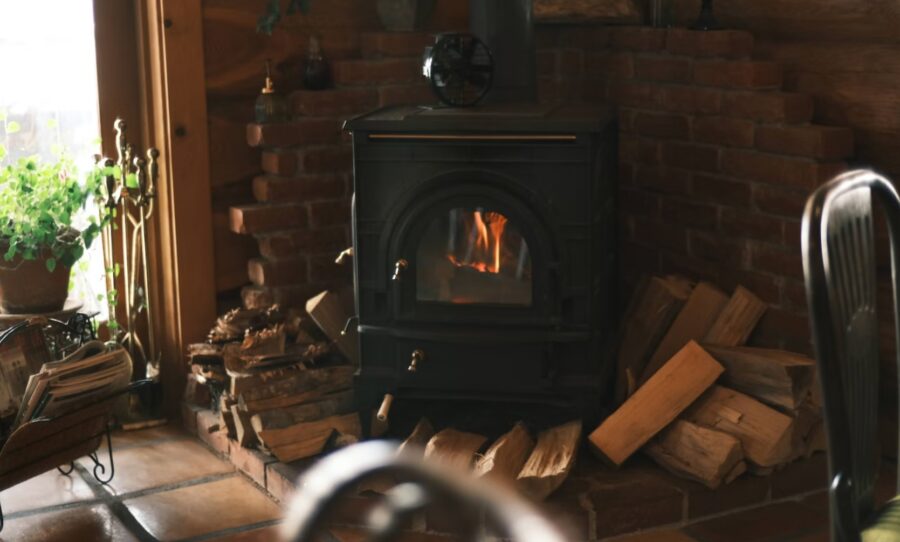
OHMYGOSSIP – Did you know that your home’s heating system can have a significant impact on your psychic abilities? If you’re interested in developing your skills in the field of esotericism, then you might want to consider switching to a wood-burning home with a wood-burning stove. This is especially true if you live in Scandinavia, where wood-burning stoves have a long and fascinating history.

Many psychics and witches have long known that wood-burning stoves can help amplify their abilities. The heat generated by a wood-burning stove creates a unique energy that can heighten your intuition and sensitivity to the spiritual world. This energy can also help you connect more deeply with the natural world, which is essential for anyone who wants to explore the mysteries of the universe.

One of the best ways to tap into this energy is by using a wood-burning stove to heat your home. Wood-burning stoves are more environmentally friendly than electric or gas heating systems because they rely on renewable resources like wood. Plus, they can help you save money on your heating bills in the long run.

But there’s more to it than just practical benefits. When you use a wood-burning stove, you’re tapping into an ancient tradition that goes back centuries. In Scandinavia, for example, wood-burning stoves have been used for centuries to provide warmth, cook food, and even perform magical rituals.

In fact, many witches and psychics believe that wood-burning stoves can help them channel their power more effectively. By sitting in front of a roaring fire, they can meditate, practice tarot card reading, and perform other esoteric rituals with greater ease and accuracy.

So if you’re looking to enhance your witchcraft abilities or develop your psychic gifts, consider switching to a wood-burning home with a wood-burning stove. Not only will you be tapping into a powerful source of energy, but you’ll also be connecting with an ancient tradition that has fascinated people for centuries.

Images: Unsplash

IS IT advisable to use foreign tarot cards for fortune-telling?

OHMYGOSSIP – Tarot cards have been used for divination and fortune-telling for centuries. Originally from Italy, the use of tarot cards has spread worldwide, and with that, different decks have been created to cater to various cultures and beliefs. However, some people may wonder if it is advisable to use foreign tarot cards for fortune-telling.

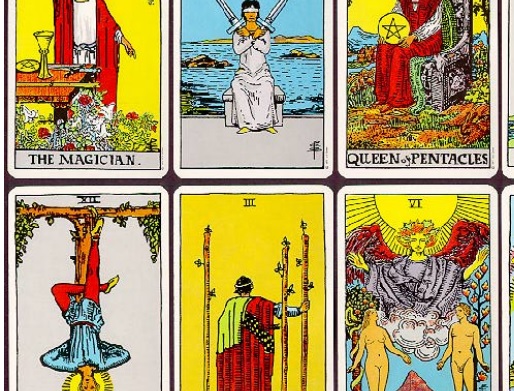
For many esoteric practitioners, the answer to this question is a resounding yes. They believe that using foreign tarot cards can add an extra layer of depth and mystery to their readings. Scandinavian psychics, for example, often use the popular Rider-Waite deck, which was created in England in the early 20th century. This deck has become ubiquitous in the tarot world and is known for its detailed illustrations and symbolic imagery.

However, not everyone agrees with the idea of using foreign tarot cards. Some believe that the cultural nuances and specific meanings behind the cards may be lost in translation when using a deck from another country. This can lead to inaccurate readings and misinterpretations.

Additionally, some people may feel that using foreign tarot cards is a form of cultural appropriation. They argue that non-native practitioners are appropriating the spiritual practices of other cultures without fully understanding their history and significance.

Despite these concerns, many tarot readers believe that magic transcends cultural boundaries and that the meanings behind the cards are universal. They argue that as long as the reader is respectful and mindful of the cultural origins of the deck, it is perfectly fine to use foreign tarot cards.

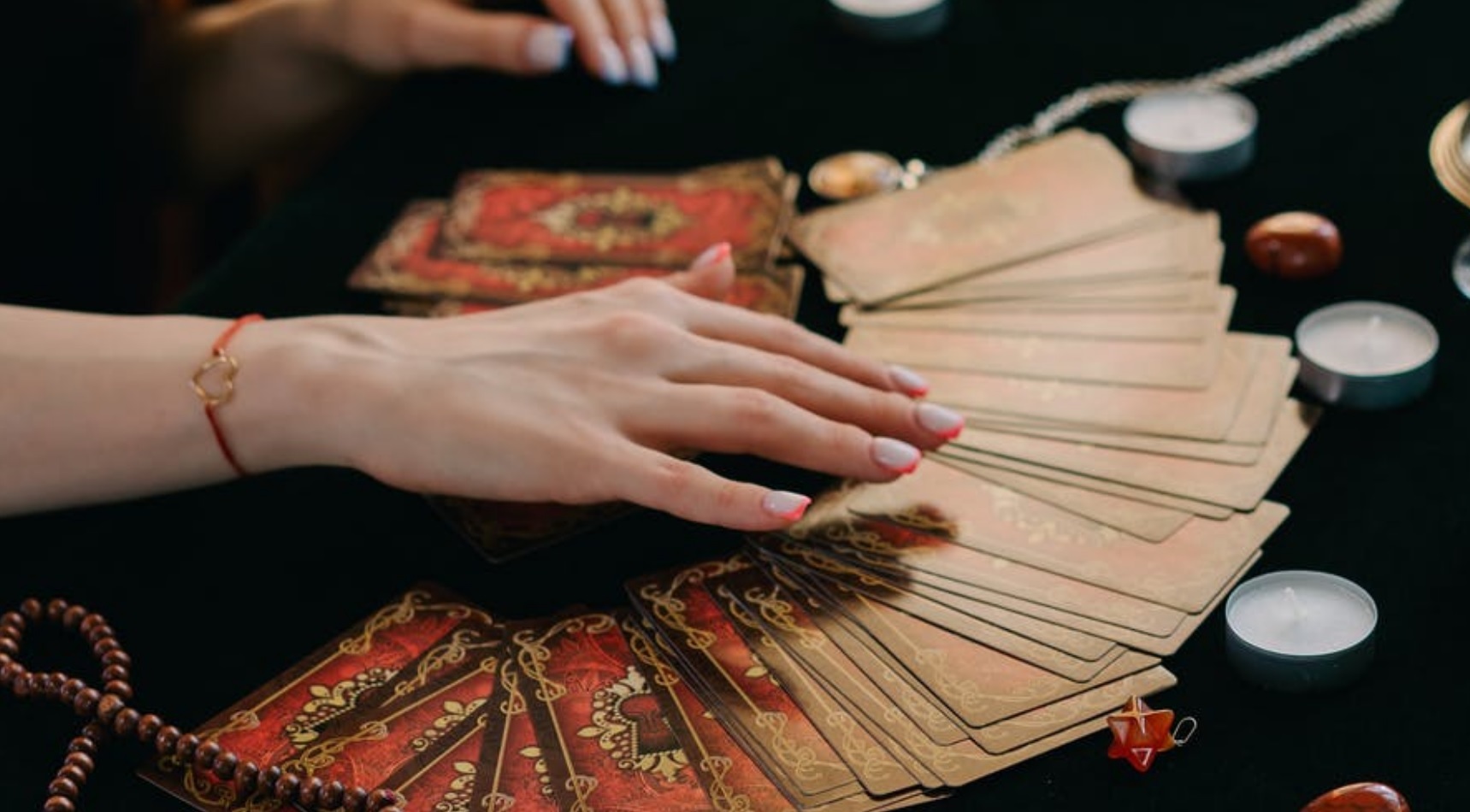
Featured image: Whether or not it is advisable to use foreign tarot cards for fortune-telling is a matter of personal preference and belief (OHMYGOSSIP)

Discovering the Magical World of Fairies in Nordic Lands

OHMYGOSSIP – Fairies, also known as mythical creatures, have captured the imagination of people for centuries. These creatures have been depicted as tiny, beautiful beings with magical powers in folklore and mythology. While they are often thought to be only found in books and stories, there are many places in the Nordic region where people claim to have encountered these enchanting creatures.

Where can fairies be found?

In Scandinavia and Baltic countries fairies are believed to live in the forests, lakes, and rivers. They are said to be particularly fond of flowers and are often associated with spring and summer. Some Nordic folklore even suggests that fairies can be heard playing music in the forests at night, and that their laughter can be heard echoing through the trees.

Another popular place to encounter fairies in the Norden is in the meadows and fields, especially those surrounded by wildflowers. It is believed that fairies are attracted to these areas because of the abundance of flowers and the peace and tranquility that they offer. Many people have reported seeing fairies dancing and playing in the fields, and some have even claimed to have had conversations with them.

Another place where fairies are believed to reside is in the mountains and hills. In the Nordic countries, there are many ancient and mysterious mountains that are said to be home to fairies. These mountains are often surrounded by legends and myths, and people have reported seeing strange lights and hearing strange noises coming from these areas.

In conclusion, fairies can be found in many different places throughout the Nordic region, from the forests and fields to the mountains and hills. Whether you believe in these mystical creatures or not, the Nordic folklore surrounding fairies is a rich and fascinating aspect of the region’s cultural heritage, and well worth exploring.

Featured image: Pexels

Mystical Mastery: Understanding the Elements of Magic

OHMYGOSSIP – Magic has captivated people for centuries and is still a source of fascination today. While it may seem mysterious and elusive, the principles behind it can be broken down into 8 elements. From the Norse magic, to the mystical arts of the East, here are the 8 key components of magic.

The 8 Essential Elements of Magic:

Intent: The first and most important element of magic is the intention behind it. This includes the purpose and desired outcome of the spell or ritual.

Energy: Magic is all about harnessing and directing energy, whether it’s the energy within you, or the energy of the universe.

Symbolism: Symbolism is an important aspect of magic, as it helps to focus the mind and give meaning to the ritual.

Elements: The elements of earth, air, fire, and water are often used in magic, as they represent the natural world and are believed to have powerful energies.

Ritual: A ritual is a set of actions or words performed in a specific way, with the intention of achieving a specific outcome. It can be as simple as lighting a candle, or as complex as a full-scale spell.

Tools: Tools such as wands, tarot cards, and crystals can be used to enhance the magic and focus the mind.

Meditation: Meditation is a key component of magic, as it helps to calm the mind and connect with the energies of the universe.

Belief: Finally, belief is the most important element of magic. Without belief, magic will not work.

In the Nordic countries, magic has been a part of the cultural heritage for centuries. From the ancient runes of the Viking Age to the modern-day Wiccans of Scandinavia, magic continues to play a role in the lives of many people. Whether you believe in the power of magic or not, its elements offer a fascinating glimpse into the mysterious and the unknown.

Featured image: Pexels

IS THERE a connection between fairy tales and esotericism?

OHMYGOSSIP – Fairy tales and esotericism have some similarities in that they both often deal with themes of magic, symbolism, and the supernatural. However, their primary focus and the way they approach these themes can differ.

Fairy tales are primarily stories that are passed down through generations and are meant to entertain, teach moral values and to provide a form of escapism for readers. They often feature magical elements such as talking animals, witches, and enchanted objects, but these elements are typically used to convey a moral or lesson in a metaphorical way.

Esotericism, on the other hand, is a broad category of knowledge that deals with hidden or occult wisdom, and encompasses a wide variety of spiritual and philosophical traditions. It often deals with the search for understanding of the inner nature of things, and can include practices such as alchemy, astrology, mysticism, and the occult.

Some fairy tales may be considered esoteric in nature, as they contain symbolic and allegorical meanings that reflect on the inner nature of things. But in general, the primary focus of fairy tales is to entertain and educate, while esotericism is mainly focused on the search for hidden knowledge and spiritual transformation.

Featured picture: Pexels

Read also:
WHAT are the ten most interesting nuances that every fairy tale should contain?

WHAT DO TOES tell you about your health and what is the message sent by socks

OHMYGOSSIP – You have definitely heard that it is good to walk barefoot and that taking foot baths will stimulate circulation. Feet have a great impact on a person’s health status. There are reflex points on the feet through which it is possible to stimulate the work of organs, alleviate stress and make us feel better. The toe gaps reflect the organism’s viruses, and by kneading toe gaps it is even possible to stimulate the hearing and vision organs.

The big toe is Father, the second toe is mother, the third toe is yourself, the fourth toe are your relatives and the fifth toe are your acquaintances, friends. Whenever there is a problem with the big toe, revise your relationship and emotions regarding your father. The same conclusion can be made about other toes by using this analogy.

The big toe is connected to the head and the liver. The toxins-residues remaining in the organism are a burden to the liver. When the big toe is turned upwards, this means that the person is stressed, and when the toenails are turned upwards, this means the head is full of negative energy.

The second toe is connected to the stomach and the nerves. A long lasting nervous state can bring along gastric ulcers, gas, etc. Also it gives a hint about the person’s entrepreneurship: the one with a weak and small second toe will not make a good business partner.

The third toe is indirectly connected to the immune system and it is exactly this system that keeps our hands and feet warm and adds vitality.

The fourth toe is connected to the lungs, intestines and bile. When the fourth toe is crooked or problematic, this means that the person has problems with the intestines. Diseases related to the bile make a person aggressive, diseases related to the lungs make the person melanholic.

The little toe is connected to the kidneys and the bladder, also it is connected to several fears. These fears are often related to childhood. A timid or scared person should stimulate (knead) their little toe.

What can you do to advance your own health?

Couples might knead each other’s feet in the evening while watching TV. This procedure is intimate and it brings you emotionally closer to your partner, the procedure is versatile – it is good for the body as well as the mind. People in a relationship do not touch each other enough, this causes emotional problems and accumulates stress.

What do your socks tell you?

Socks wear out from places indicated by the organism. For example heels wear out when the person is nervous and agitated, but also when the person has problems with the kidneys and bladder. The big toe will wear out the socks of those people whose brains are working too intensively. Overworking, stress, problems with alcohol, liver disease indicate themselves when the socks wear out from the big toe. The dirtiest part of the sock indicates where the tension is the greatest. The same is indicated by the wearing out of the shoes.

Featured image: Pexels
Source: Ohmygossip.ee

LOVE SPELLS and winning yourself a man using “magic” + LOVE potion recipe

OHMYGOSSIP – Without love a person is never fully happy. Yet does it make us happy when the love has been earned or restored with magic? Is it possible to win the man that you love back with magic? Is it quite that easy to make a stranger fall in love with you? Can love spells affect and boost the feeling of happiness?

One-sided love definitely hurts, and when in love, we are ready to go great distances, yet binding another person by using magic is a dangerous undertaking. Those experimenting with witchcraft should be extra careful, since love magic may help you win to yourself the desired man, but it may harm the health of the man under the spell, or your own health. When someone or something stays with you for too long, they will start consuming your energy. The man under your spell may become zombie-like from being tied to you.

Concerning love, women have more influence as compared to men. When a woman’s soul or heart is closed, a man wouldn’t have access to her. Yet a man’s soul is fragile, therefore he is very cautious about opening his soul. The first woman that can destroy a man’s soul is his mother. When that happens, the man will not open his heart for a new woman that easily.

When the couple is not together based on mutual love and reasoning, then by casting a spell on a man the woman takes a great burden that she has to live with all her life.

Love is a biological and dynamical process that deeply affects both sides on many levels. Though essentially love is an intellectual feeling, also the physical body seeks love and reacts to it being present or missing.

What tricks were used in older times to arrange the love life?

People used to spread their so-to-say pheromones, saliva, sweat, even menstrual blood – something from their body was put inside (leaving them inside a pie) or on top of food. There was such a belief that by doing so you tie the person to yourself. There are several of those stories in the folklore archives: for example apples were held in armpits before offering them to the desired person.

However, many sorcerers recommend trying love herbs before turning to spells and magic. Love herbs will lead you to natural love energy. For example coriandrum that is mainly known as a spice, has been used in love potions for many millennia.

A love potion recipe for finding yourself a man:

1. Find a moment when you are home alone (best timing is when you are also ovulating). Take a bath or a long shower, wash your hair, do a proper manicure and pedicure and then dress as if you would when meeting a man of your dreams.

2. Now prepare tea from the following ingredients:
dandelion (dried inflorescence), fireweed (dried leaves and inflorescence), ginger and coriandrum. Let sit for 10 minutes. To the end product add a bit of cinnamon and honey.

3. Light candles on the table (red) and when drinking the love potion think about the person that you wish to be with or picture the person that you invite in your life, and say out loud your pre-written Prayer. The prayer may be really simple, for example: Dear Mother Nature and the Almighty, I wish to find my love. Compile a cordial prayer that suits just you.

Featured photo: Pexels
Source: Ohmygossip.ee

This article is about love spells, magic, love potion, esoteric, witchcraft.

Synonyms for magic:
fascination, illusion, wizardry, alchemy, allurement, astrology, augury, bewitchment, conjuring, conjury, devilry, diabolism, divination, enchantment, exorcism, foreboding, horoscopy, incantation, legerdemain, magnetism, necromancy, occultism, power, prediction, presage, prestidigitation, prophecy, rune, soothsaying, sorcery, spell, superstition, taboo, thaumaturgy, trickery, voodoo, voodooism, witchcraft, black art, fortune-telling, hocuspocus, sleight of hand, sortilege

FOR THIS REASON women should not wear a ring on the thumb

OHMYGOSSIP – Wearing a ring is an ancient and widespread thing among men as well as among women. The ring as such is a magical thing and wearing a ring is connected with certain rules. It will affect your life and future which finger you put the ring on.

It is definitely important in which hand you wear the ring. The left hand is the passive hand – receiver, the right hand is the active hand. The left is Yin and the right is Yang. By putting the ring on the left hand, you accept the surrounding energies and that is why this is suitable for charging and renewing yourself. Wearing the ring on the right hand will enhance creativity, activity and generosity. Energy pours out, this will bring along purification. Left-handed people must read this the other way round.

The most popular finger to wear a ring on is the ring finger or the fourth finger, Apollo – love for beauty, creativity, self-expression, good relations.

Thumb is the “masculine” finger, symbolizing intact reason, logic, intelligence, and it is connected to the following strong features: courage, the will to win, perseverence. Wearing a ring on this finger will advance the expression of those features.

When girls wear jewellery on the thumb, this will subjugate the energy of Venus — it inhibits femininity and impedes chances to find a partner.

Photo: Pexels
Source: Ohmygossip.ee

HOW to synchronize beauty rituals with lunar phases?

OHMYGOSSIP – You often look into different horoscopes and when meeting someone new, among your first questions is “What’s your sign?” If so, then this article is for you! No doubt the position of the planets affects us in every way.

This OHMYGOSSIP esoterics article depicts how the Moon affects the results of beauty rituals. The waxing phase of the Moon affects beauty rituals just as it affects the growth of plants.

Below we bring out 3 beauty procedures to complete during different lunar phases:

1. Peel your skin during a full moon

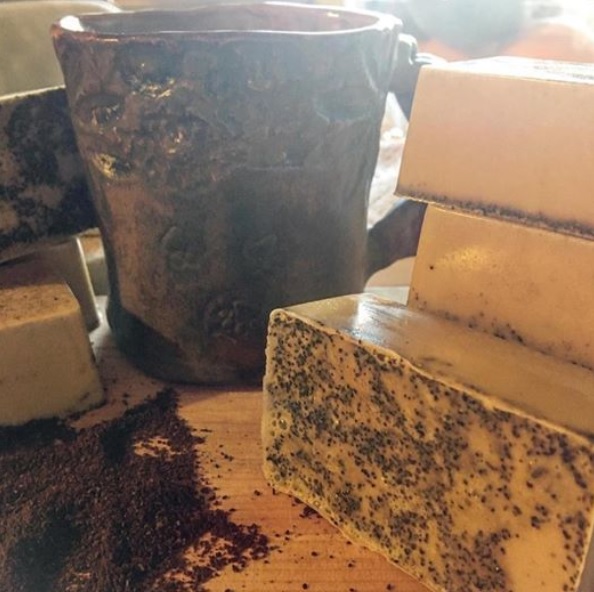
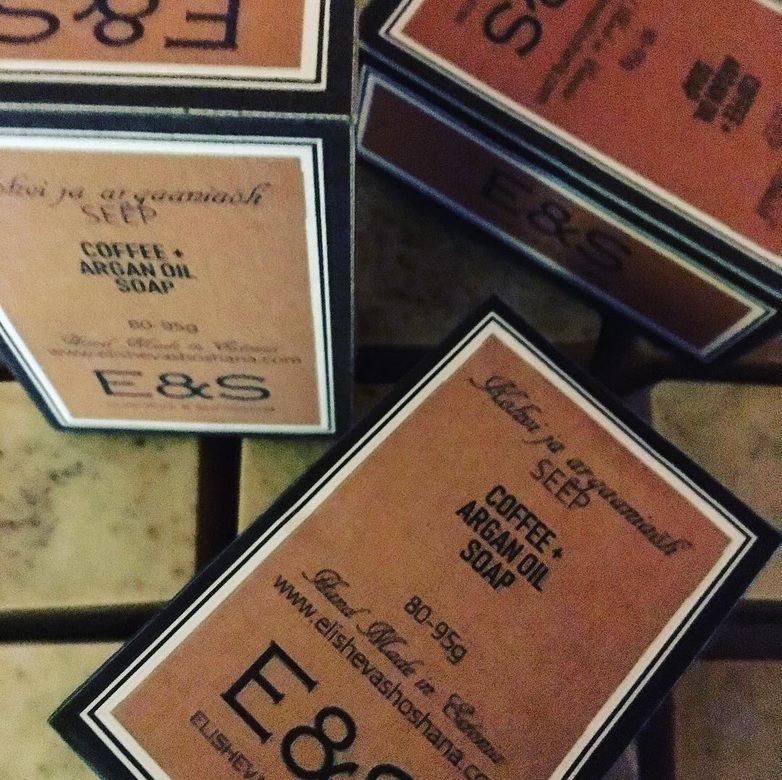
This is the time of liberation energetically as well as physically. That includes getting rid of toxins that have accumulated in the skin, and the creation of new skin. During a full moon it is recommended to shower a bit longer than usual and peel the entire body, and then moisturize the skin with lotion or oil. It is said that during a full moon more nutrients will be absorbed through the skin. The magic is multiplied by coffee. Thus it would do good to rub the skin with coffee (home peeling) or with coffee-based products. For example, one really good product is the Estonian handicraft cosmetics product by Elisheva & Shoshana, Coffee and Argan Oil soap, this has very efficient peeling properties, it contains lots of coffee and offers immediate moisturization due to the argan oil ingredient.


2. Cut your hair during a new moon

It has been talked about for ages that cutting your hair at the right time periods will add fullness and length. Should you wish your hair to start growing faster, definitely cut them during a new moon and the waxing lunar phase. Should you wish your hair to grow slower, cut them during the waning lunar phase.

3. Do your manicure during a new moon

Do you have weak nails that easily break? To boost their growth and add strength, it helps to do the manicure during a new moon. The new moon is energetically the most powerful.

Featured image: Pexels
Source: Ohmygossip.ee

A Beginner’s Guide: How to Become a WITCH?

OHMYGOSSIP –  This article offers a few tips about witchcraft for beginners. If that’s you, read this post to learn how to start practicing witchcraft the right way.

Who is a witch and what is a witchery?
The word witch is of uncertain origin. There are numerous etymologies that it could be derived from. One popular belief is that it is “related to the English words wit, wise, wisdom [Germanic root *weit-, *wait-, *wit-; Indo-European root *weid-, *woid-, *wid-],” so “craft of the wise.” Another is from the Old English wiccecræft, a compound of “wicce” (“witch”) and “cræft” (“craft”).

In anthropological terminology, witches differ from sorcerers in that they don’t use physical tools or actions to curse; their maleficium is perceived as extending from some intangible inner quality, and one may be unaware of being a witch, or may have been convinced of his/her nature by the suggestion of others.

Witchcraft or witchery broadly means the practice of and belief in magical skills and abilities exercised by solitary practitioners and groups. Witchcraft is a broad term that varies culturally and societally, and thus can be difficult to define with precision, and cross-cultural assumptions about the meaning or significance of the term should be applied with caution. Witchcraft often occupies a religious divinatory or medicinal role, and is often present within societies and groups whose cultural framework includes a magical world view.

How to become a witch?

1. Choose your path.
There’s no shortage of types of witchcraft, meaning there’s also no shortage of choices for an aspiring witch. Rather than get overwhelmed, get your bearings by having at least a basic understanding of the terms below.

Paganism: Paganism is a term that covers a great number of spiritual and religious beliefs, and someone who follows one of these beliefs is known as a Pagan. Those in ancient times, who are called Pagans today, believed there was not just one god but a number of gods and goddesses.

Odinism: Odinism is a synonym for Heathenry (new religious movement) favored by some of the religion’s practitioners. Odinism may also refer to: Norse paganism. Old Norse religion was polytheistic, entailing a belief in various gods and goddesses. Norse mythology divided these deities into two groups, the Æsir and the Vanir, who engaged in an ancient war until realising that they were equally powerful. Among the most widespread deities were the gods Odin and Thor.

Wicca: Wicca, also termed Pagan Witchcraft, is a contemporary Pagan new religious movement. It was developed in England during the first half of the 20th century and was introduced to the public in 1954 by Gerald Gardner, a retired British civil servant. Wicca is a polytheistic, neo-pagan religion that acknowledges the existence of many gods and goddesses. Its most frequently revered gods and goddesses are the Horned God of the Forest and the Goddess. The Horned God of the Forest is a masculine fertility god associated with the wildness of nature.

Ceremonial: The by-the-book practice of placing the highest value in—not to mention expertly executing—ceremonies and rituals.

Brujería: An umbrella term for African, Caribbean, and indigenous Latin American witchcraft, dating back centuries, if not thousands of years. Increasingly, though, the word bruja, Spanish for witch, has been reclaimed by Latinx women interested in their heritage—and made contemporary by, say, using the gender-neutral term brujx.

Solitary: This group is made up of those who choose not to find a coven, but instead operate on their own with the type (or mix) of witchcraft that they choose.

Eclecticism: A more social route for those who choose not to stick to a particular category but instead mix traditions as they please.

2. Learn the terminology.
Any beginner should have at least cursory knowledge of the terms listed below:

Initiation: The rites that put a budding witch on the path to making things official, by joining a coven after studying its practice, traditionally for a year and a day. The initiations that follow eventually allow the initiate the opportunity to become a high priest or high priestess; those with enough knowledge, experience, and dedication can become the leader of a Wiccan coven.

Coven: A gathering or community of initiated witches, usually led by a high priest and/or high priestess. If a coven is Wiccan, their meetings often involve sabbats, which are celebrations of the annual cycle of seasonal festivals known as the Wheel of the Year. (Non-sabbat meetings, such as the observation of a full moon, are known as esbats.)

Familiar: An animal-shaped spirit that serves as a witch’s spy, assistant, companion, and protector—the classic example of which is Sabrina’s black cat, Salem.

Altar: A surface that a Wiccan uses solely for activities such as casting spells, chanting, and worshipping the god and goddess. Typically, the altar is covered in a symbol-adorned cloth, which protects it from ash, liquids, and candle wax, as well as religious and ritual items like incense, wands, chalices of water, and cauldrons.

Pentacle: A magical tool such as an amulet or talisman that often appears on an altar, and is also often confused with a pentagram—a symbol popular in Wicca and, confusingly enough, the Church of Satan, which has pretty successfully taken ownership of its inverted version. (Inverted pentacles aren’t necessarily satanic, though Wiccans have recently largely strayed from using them to avoid that association.)

Black Magic: A form of magic used with dark, malevolent, and harmful intentions, commonly associated with satanism. Spells have been used for a variety of purposes ever since the days of the Magi of Zoroastrianism and Ancient Egypt, but those that are specifically used for negative and/or harmful purposes are known as hexes and curses.

Séance: A ceremony used to contact spirits, including the dead, usually with the help of a medium.

Grimoire: The umbrella term for a magic text, ranging from diaries to textbooks.

Book of Shadows: A Wiccan’s personal grimoire, used to store information they need, such as thoughts, recipes, and instructions for spells, rituals, and hexes.

3. Study up
Even if you think you’re sure you want to proceed, it’s best to find out what exactly you’re signing up for. Before paging through your spell books, it’s wise to do your research—particularly since the modern-day idea of witchcraft has been pieced together by a mix of legends and existing translated historical documents, leading each of the pros to have a slightly different take on the subject.

Start with the basics (and praise your deity of choice you made this decision after the invention of Google).

Depending on what type of witchcraft you decide to pursue, you’ll likely need at least a few supplies from an occult store, like candles, oils, roots, and herbs for rituals; spell books; tarot cards; potion ingredients; cauldrons; and, for those drawn to psychism, a crystal ball. (Some supplies won’t need to be purchased—the so-called Feces Spell, for example, is definitely chief in that category.)

4. Destroy the idea that the magical and the mundane are separate
Everything is connected. There is no magical world and magical items, and a separate mundane world with mundane items in it. It’s just different ways of perceiving the same objects. Meditation and ritual only get us to rise higher up the spectrum, they don’t change what is there.

The magical affects the mundane affects the magical. Beauty spells won’t work if you keep eating sugary sweets every day. Spells will have direct consequences in the mundane world – protection spells can give would-be intruders headaches or cause them to feel unsafe. They don’t magically bounce off an invisible shield and give up.

For spells to work, you must move the pieces of your mundane life around as best you can, and the same the other way – there’s no point asking for sailboat if you don’t have access to a marina to put it in, or have a job, business or wicked poker skills to give the Universe an avenue for the money to come down.

5. Practice
Some places to start are learning how to do a candle dressing, trying out some basic rituals, and familiarizing yourself with the different uses of crystals and candles—all of which you can keep a record of in your Book of Shadows. ​

All magical paths deal with magic. Therefore, there are three magical skills that will benefit anyone to practice regularly, especially when beginning. These three skills are:

a) Meditation
b) Feeling energy
c) Forming energy

Meditation should need no introduction, but the other two might. As humans, we’re sensitive to what we might call ‘energy’ whether we are consciously aware of it or not. We can tell if people in a room are friendly or standoffish without even speaking to them. We can feel if someone is staring at us from behind. We can sometimes tell if people are upset without their behaviors or expressions saying so. We can know if a place is haunted, or recently used. Training this skill can be as simple as noticing it happening. Whenever you make a judgement about a new person or situation, make a point of returning to that judgement and seeing if you were right or wrong as soon as you can get more physical evidence.

Don’t forget mental skills!
Mental skills like the all too rare common sense are also necessary to ease your beginning years. Understand fire safety, and basic first aid. Know which essential oils can kill children and pets, which things create toxic fumes when burnt or mixed, and that when you’re wandering around the woods at night that your biggest threat is exposure, injury or other humans. For example. The list goes on. Before you start ingesting herbs, or pouring vinegar down your toilet with bleach in it, quickly Google to see if what you’re about to do is wise.

Discernment is another mental skill that you will build with practice and constant questioning. Never accept spiritual messages at face value. Is it a warning from the Spirits, or your anxiety playing up? Is it your grandma coming through from Beyond, or is it wishful thinking? Is it an omen, or just some random birds?

With time (and lots of meditation) you will be able to know what is your voice, and what comes from something else.

Question everything.

Featured image: Pexels/Pixabay

 

WHAT is esotericism? Q&A

OHMYGOSSIP – Esotericism refers to the doctrines or practices of esoteric knowledge, or the quality or state of being obscure. Esoteric knowledge is that which is specialized or advanced in nature, available only to a narrow circle of “enlightened,” “initiated,” or highly educated people. Typically, esoteric knowledge is contrasted with exoteric knowledge, which is well-known or public knowledge perceived as informally canonic in society at large. Items pertaining to esotericism may be known as esoterica.

Esotericism largely involves an element of initiation such as the requirement that one be tested before learning the higher truth. However, such knowledge may be kept secret not by the intention of its protectors, but by its very nature—for example, if it is accessible only to those with the proper intellectual background.

Some overlap may exist between esotericism and mysticism; but many mystical traditions do not attempt to introduce additional spiritual knowledge, but rather seek to focus the believer’s attention or prayers more strongly upon the object of devotion. A mystic is thus not necessarily an esotericist. A variety of past traditions could be classified as forms of “esotericism” due to their “inner” focus as well as their “selective” and “secretive” nature.

Esoteric is an adjective originating in Greece; it comes from the Greek ἐσωτερικός esôterikos, from esôtero, the comparative form of ἔσω esô: “within.” Esoteric refers to anything that is inner. Its antonym is exoteric, from the Greek ἐξωτερικός eksôterikos, from eksôtero, the comparative form of ἔξω eksô: “outside.” Plato, in his dialogue Alcibíades (circa 390 B.C.E.), uses the expression ta esô, meaning “the inner things,” and in his dialogue Theaetetus (circa 360 B.C.E.) he uses ta eksô, meaning “the outside things.” The probable first appearance of the Greek adjective esôterikos is in Lucian of Samosata’s “The Auction of Lives,” § 26 (also called “The Auction of the Philosophical Schools”), written around 166 C.E.

The term esoteric first appeared in English in the 1701 History of Philosophy by Thomas Stanley, in his description of the “Auditors of Pythagoras.” The Pythagoreans were divided into “exoteric,” which were under review, and “esoteric,” which had performed well enough to be admitted into the “inner” circle.

Esotericism is not a single tradition, but a vast array of often unrelated figures and movements. Nevertheless, the following examples provide an overview of some of the most prominent esoteric movements and figures throughout history:

In the ancient Graeco-Roman world, “Mystery religions,” or simply “Mysteries,” were belief systems in which full admission was restricted to those who had gone through certain secret initiation rites.” The term “Mystery” derives from Latin mysterium, from Greek musterion (usually as the plural musteria μυστήρια), in this context meaning “secret rite or doctrine.” An individual who followed such a Mystery was a mystes, “one who has been initiated,” from myein, “to close, shut,” perhaps a reference to secrecy or that only initiates were allowed to observe and participate in rituals.

The Mysteries were thus belief systems in which all religious functions were closed to the non-inducted and for which the inner-working of the religion were kept secret from the general public. Although there are no other formal qualifications, mystery religions were also characterized by their lack of an orthodoxy and scripture. Religions that were practiced in secret only in order to avoid religious persecution are not, by default, Mysteries.

The old meaning of “mystery” is also preserved in the expression “mystery play.” These stage performances of medieval Europe were known as such because the first groups to perform them were the craftsmen guilds, entry to which required an initiation and who zealously protected their trade secrets.

What is a esoteric person?
The term esoteric has been adopted in the spiritual community in a more philosophical sense, it is used to describe a practice or a person who seemingly has a deep knowledge of the universe and the lessons within it and actively works to connect with those things.

What is the meaning of esotericism?
Esotericism is the state or quality of being esoteric—obscure and only understood or intended to be understood by a small number of people with special (and perhaps secret) knowledge. Esotericism often involves knowledge that’s only intended to be revealed to people who have been initiated into a certain group.

What is esoteric example?
The definition of esoteric is something only understood by a chosen group. An example of esoteric is pa++ern, an embroidery language. Having to do with concepts that are highly theoretical and without obvious practical application; often with mystical or religious connotations.

Is esoteric a religion?
The term esoteric was coined in the 17th century and derives from the Greek ἐσωτερικός (esôterikos, “inner”). Esotericism as a universal, secret, inner tradition.

What does esoteric mean spiritually?
Esoteric, the quality of having an inner or secret meaning. This term and its correlative exoteric were first applied in the ancient Greek mysteries to those who were initiated (eso, “within”) and to those who were not (exo, “outside”), respectively.

What is an esoteric thinker?
What does esoteric mean? Esoteric most commonly means obscure and only understood or intended to be understood by a small number of people with special (and perhaps secret) knowledge. It’s often used to describe knowledge that’s only intended to be revealed to people who have been initiated into a certain group.

What are esoteric subjects?
An esoteric subject is a subject that is known to a select group of people rather than the population at large.

What is ceremonial magick?
The magic of Western Esotericism is known as ceremonial magick.

Ceremonial magic or ritual magic, also referred to as high magic and as learned magic in some cases, is a broad term used in the context of Hermeticism or Western esotericism to encompass a wide variety of long, elaborate, and complex rituals of magic.

It is named as such because the works included are characterized by ceremony and a myriad of necessary accessories to aid the practitioner. It can be seen as an extension of ritual magic, and in most cases synonymous with it.

How Ceremonial Magic differs from Witchcraft?
In many different ways. The first of which is that most practitioners of Witchcraft are not well versed in the Western Esoteric Tradition, and many have never heard of its existence.

Witchcraft doesn’t require a strong basis of philosophical and occult philosophy to preform either. Moreover, most Ceremonial Magicians have a degree of skepticism in their practice. Generally speaking, the Ceremonial Magician is more concerned in the pursuit of hidden knowledge and the scientific explanations for why things occur than those that practice Witchcraft. Many occultists attempt to explain magical phenomena as extensions of the power one’s mind on the perception of their physical reality. In other words, they believe it’s all in their heads, and that a little imagination can be a powerful instrument for changing one’s life.

What is Hermeticism?
Hermeticism is a religious, philosophical, and esoteric tradition based primarily upon writings attributed to Hermes Trismegistus (Thrice Great). These writings have greatly influenced the Western Esoteric tradition and were considered to be of great importance during both the Renaissance and the Reformation eras.

Hermes Trismegistus is thrice great because he is considered to be the founder of the three parts of wisdom: Alchemy, Astrology, and Magic. His contributions to Alchemy have turned into modern medicine, and astrology into modern astronomy. It could be argued that his magical teachings have a great influence on modern psychology as well.

Featured image: Pexels

This article is about spiritual community, magic, esotericism and mysticism

Synonyms for esotericism:
newness, weirdness, abnormality, bizarreness, eccentricity, exoticism, foreignness, novelty, oddity, unconventionality, esoterism, fantasticality, indescribability

WHAT DO psychic and medium mean?

OHMYGOSSIP – Psychic or medium? What’s the difference between a medium and a psychic?Thanks to their vastly different meanings as adjectives (“referring to the mind in a psychological sense” vs. “the middle of something”), medium and psychic only overlap as nouns. Although they are closely related in the realm of supernatural capabilities, stick to psychic if you’re referring to a person who is sensitive to parapsychological forces or influences.

Some persons seem to be born with a special intuition to always know things before they happen. Others have a special gift allowing them to see ghosts or talk to the dead. But are people with these unique talents psychics or mediums? And can the words psychic and medium be interchanged?

The answer is sometimes; psychic and medium aren’t always synonyms, and despite both having a spooky or supernatural connotation, they have distinct meanings as adjectives but not nouns.

What does psychic mean?
As an adjective, psychic means “of or relating to the human soul or mind,” or something mental as opposed to physical. It’s also defined in psychology as “pertaining to or noting mental phenomena,” which describes being in tune to some nonphysical force or agency. For example, Having heard that colors can provoke a psychic response, I decided to paint the room a calming blue.

Psychic can also mean “sensitive to influences or forces of a nonphysical or supernatural nature.” So if someone or something is influenced by a mysterious force that’s outside physical science or knowledge, it’s a psychic influence. For example, it was a psychic feeling that led him to run out of the building right before a fire started.

Who is a psychic?
A psychic is a person who claims to use extrasensory perception (ESP) to identify information hidden from the normal senses, particularly involving telepathy or clairvoyance, or who performs acts that are apparently inexplicable by natural laws, such as psychokinesis or apportation.

The word “psychic” is derived from the Greek word psychikos (“of the mind” or “mental”), and refers in part to the human mind or psyche (ex. “psychic turmoil”). The Greek word also means “soul”. In Greek mythology, the maiden Psyche was the deification of the human soul. The word derivation of the Latin psȳchē is from the Greek psȳchḗ, literally “breath”, derivative of psȳ́chein, to breathe or to blow (hence, to live).

French astronomer and spiritualist Camille Flammarion is credited as having first used the word psychic, while it was later introduced to the English language by Edward William Cox in the 1870s.

As an adjective, most relevant synonyms for psychic are:
mental
metaphysical
psychological
spiritual
supernatural
clairvoyant
intellectual
mystic
occult
sensitive
analytic
cerebral
immaterial
impressible
impressionable
intellective
preternatural
psychal
psychical
psychogenic
responsive
sensible
sensile
sentient
supersensible
supersensitive
supersensory
supersensual
susceptible
susceptive
telekinetic
telepathic
transmundane

As a noun, psychic refers to “a person who is sensitive to psychic influences or forces.” For example, since she was a little girl, Anette’s grandmother has sworn she’s a psychic and can tell when something bad will happen. In addition to medium, other synonyms for psychic as a noun include clairvoyant, fortune-teller, and prophet.

First recorded in 1855–60, psychic originates from the Greek word psȳchikós, meaning “of the soul.”

What does medium mean?
If you’re a psychic, you probably already know that next up we’re going to talk about medium and the different meanings it has depending on which part of speech it is.

Medium as an adjective is defined as “about halfway between extremes, as of degree, amount, quality, position, or size.” For example, she has sensitive skin so instead of showering with hot water, she can only handle it at medium temperature. Synonyms for medium in this sense include average and intermediate.

As a noun, medium has a few different distinct meanings including: “a middle state or condition,” “the material or technique with which an artist works,” or “one of the means or channels of general communication, information, or entertainment in society, as newspapers, radio, or television.”

However, similar to psychic, medium can also mean “a person through whom the spirits of the dead are alleged to be able to contact the living.” For example: After her brother died suddenly, Anders went to a medium to connect with her brother’s spirit and communicate one last time. Synonyms for medium as a noun in this sense of being able to contact the dead include spiritualist, clairvoyant, mind reader, and fortune-teller.

Medium originates from the Latin word medius (“middle”) and was first seen in English between 1575–85.

Most relevant antonyms for medium:
abnormal
biased
different
exceptional
extraordinary
extreme
infrequent
irregular
noble
partial
prejudiced
rare
uncommon
unreasonable
unusual

Synonyms for medium are:
intermediate
common
commonplace
fair
mean
median
middle
middling
moderate
neutral
normal
ordinary
par
standard
fairish
medial
mediocre
passable
popular
run-of-the-mill
so-so

Featured photo: Pexels